Very pleased with the product.
Love it, This good and dance with it.
Love they're bedding products, hoping to purchase more in the future
Bought this for my wife and she loves it



Denier is literally the number one thing that determines how see-through (or opaque) your tights are. Lower denier equals more transparent; higher denier equals more coverage. Once you understand that single principle, choosing the right tights becomes way easier. Let's walk through how to use this simple system to find exactly what you need for your closet.
In this article
Denier (abbreviated as "den") is a measurement of fabric weight. Specifically, it measures how much one strand of yarn weighs over 9,000 meters of fiber. The higher the denier number, the heavier and thicker the yarn, and therefore the more opaque the tights.
Think of it like this: imagine two pairs of curtains. One is made from gossamer-thin fabric, and you can see right through it to the window behind. The other is made from heavy linen, and it blocks the view completely. Same concept with tights.
Related: Satin Sleepwear Fabric & Care Guide: Wash & Store Right
The denier number tells you exactly how much "see-through" you're getting before you even try them on. That's the magic of the system.
Denier falls into predictable bands, and each band has a totally different vibe and purpose. Here's what each range delivers:
These are the gossamer options. Your legs still show through clearly, but the tights add a refined shimmer and a polished finish. Sheer tights are perfect for formal evenings, date nights, or anytime you want that elegant, sophisticated leg without heavy coverage.
They're also fantastic in summer or warm climates because they add just enough texture without making you feel hot. A 15-denier option at SatinBoutique is basically the red carpet choice—it catches light beautifully and makes your skin tone look luminous.

This is the sweet spot for most people most of the time. You get a noticeable layer of coverage, but your skin tone still peeks through. Semi-opaque tights work for the office, casual dates, weekend outings, and transitional weather.
They're sturdy enough to resist ladders (though no tights are totally ladder-proof), and they feel more substantial on your legs than sheer options.
These are the heavy hitters. At 60 denier and above, your legs are fully covered. No skin shows through at all. Opaque tights are your best friend in winter, for layered looks, or when you want pure coverage without any sheerness.
They're thicker, warmer, and provide serious durability. If you're shopping for cold-weather essentials, opaque is your territory.
The best way to nail this decision is to think about the occasion first, then match the denier to it.
Go sheer (10-20 denier). A cocktail dress, gown, or formal outfit almost always looks better with sheer tights. They elongate the leg, add polish, and feel luxurious without competing with your outfit. If you're wearing heels and a dress to anything special, sheer tights are the expectation.
Semi-opaque (30-40 denier) is your default. It looks polished without feeling heavy, and it works year-round. You get enough coverage to feel put-together, but not so much that you feel like you're in winter gear in June.
Semi-opaque or opaque (30-60+ denier) depending on the season. Pair them with sweater dresses, midi skirts, or knee-length styles. In warm months, drop down to semi-opaque. In cold months, go opaque for warmth.
Opaque (60+ denier). You want thermal protection and full leg coverage. Layering opaque tights under a skirt or dress is the perfect winter move, and you get genuine warmth instead of just style.
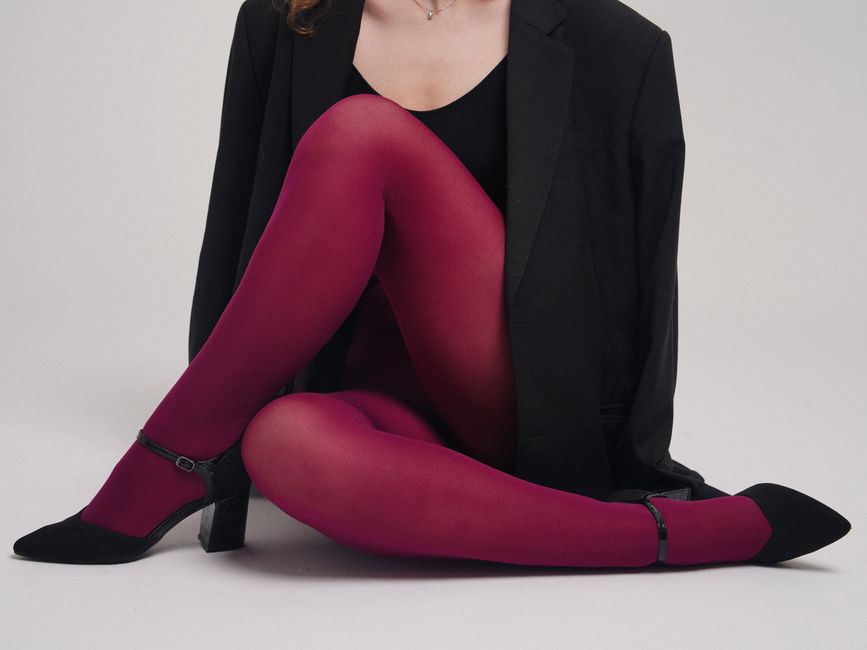
Denier choice isn't just about opacity. It's also about how your tights interact with your skin and your clothes.
Related: Corset vs Bustier: Which to Choose for Your Style
Related: Lace vs. Satin Lingerie: How to Choose in 2026
If you have a deeper skin tone, sheer tights in a matching shade can actually look opaque on you—the color of the tights creates an optical effect of coverage even though the denier is light. Fair skin tones will show leg more obviously through sheer tights, which is sometimes exactly the look you want.
When choosing tights to pair with a specific outfit, consider the weight of the fabric you're wearing. Heavy wool dresses pair beautifully with opaque tights. Silk or satin dresses (like the pieces available at SatinBoutique) look more luxurious with sheer or semi-opaque tights that don't fight for attention.
A general rule: the more delicate and refined your dress, the more delicate your tights should be.
Your denier choices should shift with the seasons. Here's how to think about it:
That said, if you live somewhere warm year-round, you might never need to go above 40 denier. And if you live in a harsh climate, you might stick to opaque for months at a time.
Here's something people don't always realize: higher denier doesn't automatically mean better quality or longer-lasting tights. A well-made 20-denier pair can last longer than a poorly-made 60-denier pair.
What actually determines durability is the quality of the fiber, the reinforcement at pressure points (like the heel and toe), and the construction method. Premium hosiery from SatinBoutique focuses on fiber quality and reinforcement rather than just piling on denier.
When you're shopping, pay attention to fiber composition. Nylon blends and high-quality yarns resist ladders and snagging better than cheap alternatives, regardless of denier weight. A sheer tights made from premium fiber will outperform a heavy tights made from low-grade nylon.

Start by matching the occasion and season to a denier range. Then, within that range, prioritize fiber quality and fit. A well-fitting, premium pair of 30-denier tights will serve you infinitely better than an ill-fitting, cheap 40-denier pair.
Your denier choice is personal. If you love the feel of sheer tights, wear them year-round with the right outfit. If you prefer coverage, opaque tights are your friend. The system just gives you the language to find exactly what you want.
Once you've settled on your preferred denier weight, you'll find yourself reaching for the same range again and again. That's when you know you've figured out what works for your body, your style, and your life.
Yes, but not in the way you'd think. Higher denier means thicker material, which does provide more insulation. However, the real warmth factor comes from fiber content. Merino wool, cashmere blends, and thermal fibers provide genuine warmth even in lower deniers. A 40-denier thermal tights might keep you warmer than a 60-denier nylon pair. When shopping for warmth, check the fiber blend as much as the denier number. According to the FDA's textile guidance, fabric composition is the primary factor in thermal performance.
Sheer tights are more delicate than opaque tights, yes. But again, it depends on quality. A well-made 20-denier pair with reinforced areas and premium nylon will resist damage better than a poorly-made 40-denier pair. Treat sheer tights with a bit more care, wear them with closed-toe shoes, and avoid rough surfaces. They're meant to be handled gently, just like any delicate garment.
Technically, yes. If your outfit demands it (like a holiday party dress or special event), you can absolutely wear sheer tights in winter with heels and a formal dress. You won't get warmth, but you'll get the polished look you want. Just pair them with a long coat and closed-toe shoes. For actual winter warmth, though, opaque tights are the smarter choice.
30-40 denier semi-opaque tights are the most versatile for most people. They work across seasons (with layering in winter), they look polished in professional settings, they're comfortable for everyday wear, and they provide enough coverage without feeling heavy. If you could only buy one denier weight, this range is your safest bet. Many people find they can build an entire tights wardrobe around semi-opaque as the foundation, then add sheer for evenings and opaque for winter.
Comments will be approved before showing up.